Does Homeowners Insurance Cover Tornado Damage in Indiana?
The short answer to the question Hoosier homeowners ask every spring — does homeowners insurance cover tornado damage ? — is yes. A standard HO-3 homeowners policy (the kind almost every Indiana family carries) treats wind, hail, and tornado damage as covered perils. That includes damage from the tornado itself, the straight-line winds in the storm system, the hail that hits before it, and the trees that fall during it. What surprises people is everything wrapped around that yes: separate deductibles, roof depreciation rules, coverage caps on outbuildings, and what isn't covered (we're looking at you, flood water).
Indiana Sits on the Edge of Tornado Alley
Southeast Indiana is not the headline territory for tornadoes — that title still goes to Oklahoma and Kansas — but Ripley, Decatur, Jefferson, Jennings, Dearborn, and Switzerland counties are squarely inside what meteorologists call "Dixie Alley" / the eastern tornado corridor. Indiana averages around 22 confirmed tornadoes per year, and the state has seen major outbreaks in March, April, May, June, and November. Hail events are even more common — quarter-sized or larger hail strikes some part of southeast Indiana most years.
That risk profile matters because it influences how carriers structure your policy. The same homeowners insurance that performs fine in low-storm regions can have meaningful gaps here if you don't read the fine print on deductibles and roof coverage.
Wind and Hail Coverage in a Standard Indiana HO-3
Your dwelling coverage (Coverage A) handles damage to the house itself — torn-off shingles, broken windows, structural damage from a fallen tree, water that entered after the wind opened the building. Your personal property coverage (Coverage C) handles the contents inside that get damaged. Loss of use (Coverage D) pays for hotels, meals, and rental housing if your home is uninhabitable while it is being repaired.
One important detail: standard HO-3 policies cover wind-driven rain damage only when wind first creates an opening (e.g., shingles blown off, a window broken). Water that simply leaks in through an aging roof is considered maintenance and is excluded. The cause-of-loss test matters every time.
What's NOT Covered Under Wind & Hail
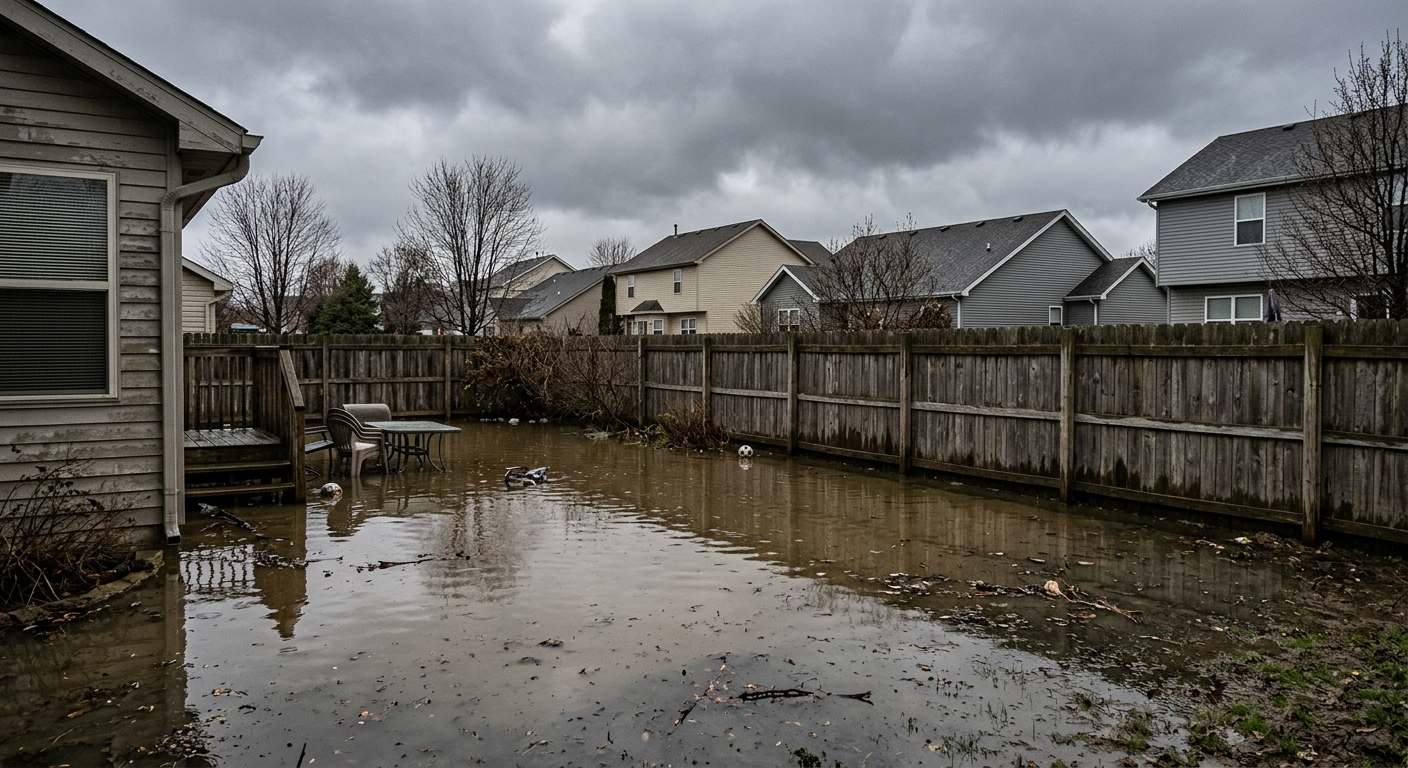
- Flooding — Even storm-driven rising water is excluded from homeowners insurance. That requires separate flood coverage. See our deep-dive on whether homeowners insurance covers flood damage in Indiana for the full picture.
- Earth movement — Mudslides triggered by storms, including post-tornado erosion, are excluded by default.
- Neglected maintenance — A 30-year-old roof that finally gave up in a moderate windstorm may be denied if the adjuster decides it was due to wear.
- Detached structures over the cap — Sheds, detached garages, and barns are usually covered at 10% of dwelling coverage. Bigger pole barns may need scheduled additions.
Watch for Separate Wind/Hail Deductibles
This is the gotcha that bites Indiana homeowners the hardest. Many wind hail insurance Indiana policies — especially in tornado-prone counties — carry a separate percentage-based wind/hail deductible. Instead of a flat $1,000 or $2,500 deductible, you might have 1% or 2% of your dwelling coverage. On a home insured at $300,000, a 2% wind/hail deductible is $6,000 out of pocket before the policy pays anything for storm damage.
This is not necessarily bad — it usually comes with lower base premiums — but you have to know it is there. When we shop policies for southeast Indiana homeowners, we explicitly review the deductible structure and explain the trade-off. A flat $1,000 deductible on storm losses can be worth the extra premium if you have a newer roof you want fully protected. For more on how these choices affect your total premium, see our guide to homeowners insurance cost in Versailles, Indiana.
Roof Depreciation: ACV vs. Replacement Cost
Roof claims are where the difference between Actual Cash Value (ACV) and Replacement Cost Value (RCV) coverage hits hardest. Under RCV , the carrier pays the full cost to replace your roof with materials of like kind and quality, minus your deductible. Under ACV , they pay replacement cost minus depreciation for the age and condition of the roof.
On a 15-year-old asphalt shingle roof with a 25-year expected life, ACV settlement can be 50% to 60% less than full replacement cost. We have seen southeast Indiana homeowners receive $8,000 settlements on roofs that cost $22,000 to replace because their policy was quietly switched to ACV on roofs over 10 years old. Some carriers automatically convert older roofs to ACV; some let you keep RCV with a small surcharge; some require a roof inspection and replacement before the next renewal. Always ask your agent what loss settlement basis applies to your roof — and get it in writing.
What to Do After a Tornado, Wind, or Hail Event
The first 72 hours after a storm matter a lot for how smoothly your claim goes. Here's the playbook we walk Indiana clients through:
- Document before cleanup — Take wide and close-up photos and video of every damaged area, inside and outside. Get the roof if it's safe; otherwise have a contractor or drone capture it.
- Mitigate further damage — Tarp the roof, board up broken windows, move undamaged contents away from leaks. Save all receipts; this is reimbursable under your policy.
- File the claim promptly — Most Indiana policies require notification "as soon as reasonably possible." Same-day or next-day is ideal. Delay gives the carrier room to argue some damage was post-storm.
- Get an independent contractor estimate — Especially on roof claims, having your own written estimate balances the adjuster's number.
- Don't sign over your claim to a storm-chaser roofer — Out-of-state "public adjusters" and Assignment of Benefits agreements have caused real problems for Indiana homeowners. Stick with reputable local contractors.
Trees, Fences, and Outbuildings — The Easy-to-Miss Coverage
Indiana storms drop a lot of trees. The general rule: if a tree hits a covered structure (house, garage, fence), debris removal and structural repair are covered, typically up to $500 to $1,000 for removal. If a tree falls in your yard but doesn't hit anything, removal is usually NOT covered. Fences are typically covered under "Other Structures" (Coverage B), capped at 10% of dwelling coverage. Detached garages and outbuildings live in that same bucket — if you have a $40,000 detached pole barn and your dwelling coverage is only $250,000, you may be looking at $25,000 of cap on a $40,000 structure. We routinely add scheduled coverage for these, especially in rural Ripley County properties.
Bundle Your Home and Auto to Soften the Premium Hit
Storm-prone counties in southeast Indiana have seen homeowners premiums climb over the past three years as carriers raise rates to keep up with severe weather losses. One of the most reliable ways to push your premium back down without dropping coverage is bundling home and auto with the same carrier. Multi-policy discounts of 15% to 25% are common, and our guide to bundling auto and home insurance in Indiana walks through how to do it without sacrificing claims service.
Talk to a Local Independent Agent Before Storm Season
The right time to fix your wind, hail, and tornado coverage is before the sirens go off — not after. Hardy Insurance Group has been protecting families across Versailles, Osgood, Holton, Milan, Napoleon, Batesville, and the rest of southeast Indiana since 1971. As an independent agency, we shop 10+ carriers to find the right balance of premium, deductible, and roof coverage for your home — including supplemental dwelling fire policies for rental properties or older structures where standard HO-3 may not be the right fit. Get a free homeowners insurance review online, or call us at (812) 689-5136 . Contact Hardy Insurance Group today and walk into the next storm season knowing your home is covered the way it should be.