Indiana homeowners insurance coverage gaps that catch people off guard
Most Indiana homeowners carry a policy and assume they are fully protected. Then a storm rolls through, a pipe bursts in January, or a neighbor's attorney sends a letter, and they discover their Indiana homeowners insurance coverage gaps the hard way. Knowing what your policy actually covers, and what it does not, is the difference between a manageable claim and a financial crisis.
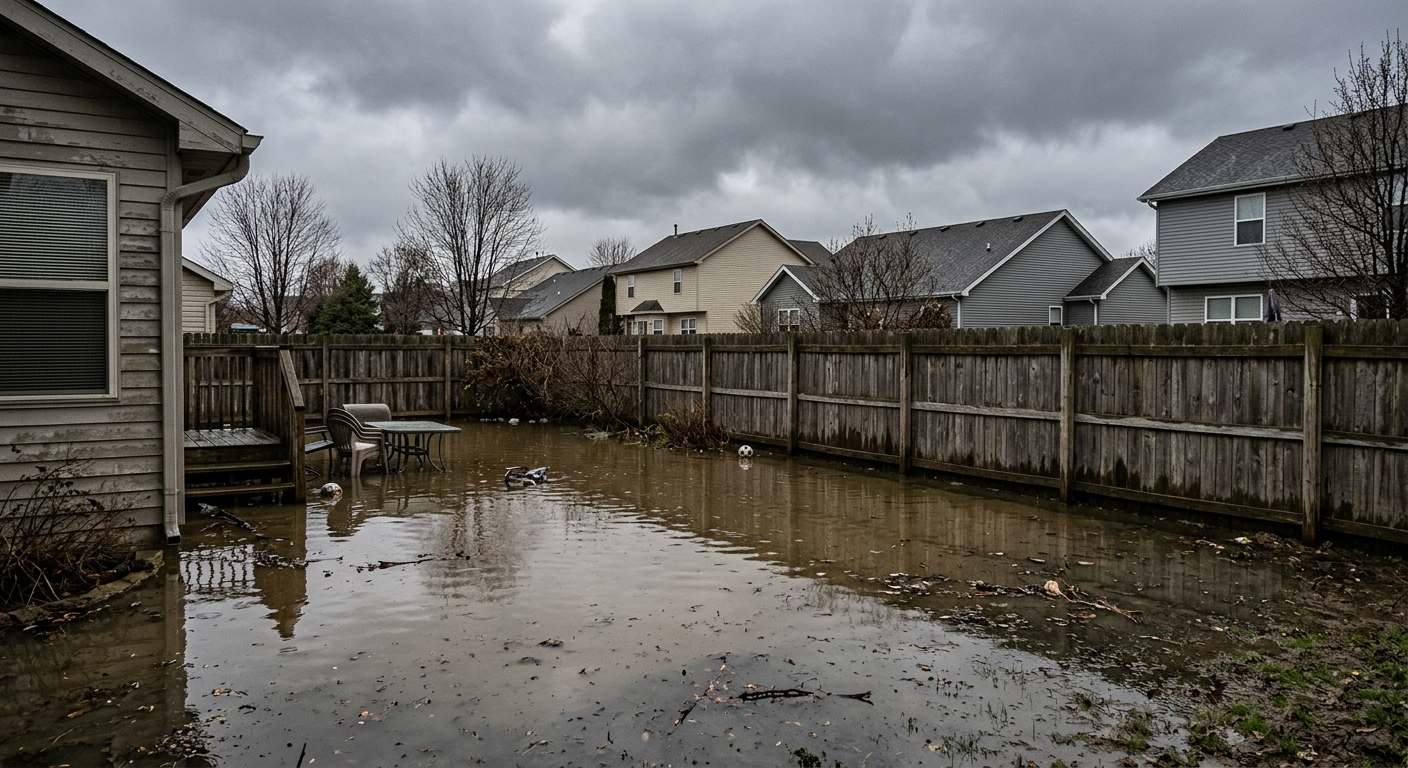
Flood damage is almost never covered by a standard policy
This is the most common coverage gap in Indiana. A standard HO-3 homeowners policy does not cover flood damage. Flooding from heavy rain, rising creeks, or overland water is excluded regardless of which carrier you use. Indiana sits in a region where spring storms and snowmelt regularly push waterways over their banks, and neighborhoods nowhere near a designated floodplain can see standing water after a hard rain.
If your home is in a FEMA-designated high-risk flood zone, your mortgage lender likely requires a separate flood policy through the National Flood Insurance Program (NFIP) or a private flood carrier. But plenty of Indiana homeowners outside those zones skip flood coverage entirely and carry real exposure. A flood loss with no policy means paying the full cost of repairs, new flooring, drywall, appliances, and personal property out of pocket.
We cover this topic in detail in our post on whether homeowners insurance covers flood damage in Indiana. The short answer is no, and the longer answer is that a separate flood policy is more affordable than most people expect.
Sewer and water backup is a separate exposure
Flooding from outside is one gap. Water coming up through your drains from below is another. Sewer or water backup coverage is typically excluded from a standard homeowners policy unless you add it as an endorsement. When a municipal sewer system gets overwhelmed or a clog sends water back through your pipes, the resulting damage to your basement, floors, and belongings falls on you if you do not have this rider.
In older Indiana communities where sewer infrastructure dates back decades, this is not a theoretical risk. Backup events can cause thousands of dollars in damage with little warning. Adding this protection usually costs between $40 and $150 per year depending on your carrier and coverage limit, which is a small price compared to tearing out a finished basement.
Replacement cost versus actual cash value: a gap hiding in plain sight
Read your declarations page carefully. There are two very different ways a policy can pay a claim on your personal property, and sometimes on your dwelling itself.
- Replacement cost value (RCV) pays what it costs to buy a comparable new item today, without deducting for age or wear.
- Actual cash value (ACV) pays replacement cost minus depreciation, meaning older items are worth far less at claim time than what you originally paid.
A five-year-old television that costs $800 to replace might only pay out $300 or $400 on an ACV basis after depreciation. Multiply that across an entire household of furniture, appliances, and electronics following a fire or theft, and the difference between the two settlement methods can reach tens of thousands of dollars.
Many Indiana homeowners carry ACV policies without realizing it, often because they chose the lowest premium option when they first bought coverage. Upgrading to replacement cost on personal property is usually worth the additional cost. Our post on what homeowners insurance covers in Indiana walks through how these payout structures work.
Dwelling coverage that does not keep up with construction costs
Even if you bought the right amount of dwelling coverage when you first purchased your policy, that number can drift out of line over time. Indiana construction costs have risen sharply in recent years, driven by material prices and labor availability. A home that cost $180 per square foot to rebuild several years ago may now cost $220 to $250 per square foot or more .
If your policy limit reflects the older cost estimate, you could face a shortfall after a total or major partial loss. This is called being underinsured , and it is more common than most people realize.
Some policies include an inflation guard or extended replacement cost provision that automatically adjusts your dwelling limit each year. Others do not. Reviewing your coverage limit annually, especially after any renovation or addition, is a habit worth building. If you recently finished a basement, added a garage, or updated a kitchen, those improvements increase your rebuild cost and should be reflected in your coverage.
High-value items that standard limits do not protect
Standard homeowners policies place sub-limits on specific categories of personal property. Jewelry is commonly capped at $1,500 to $2,500 for theft. Firearms may be limited to $2,500. Fine art, collectibles, musical instruments, and business equipment kept at home often carry their own sub-limits that fall well below actual value.
If you own an engagement ring worth $8,000, a gun collection, or expensive camera equipment, those items need to be scheduled separately with a floater or endorsement. A scheduled personal property endorsement covers items for their full appraised value and often removes the deductible on those specific items. It is not expensive, but it requires knowing what you own and asking for it.
This gap also affects home-based business owners. If you run any kind of business from your home, whether a consulting practice, a photography studio, or an online retail operation, your homeowners policy likely excludes or severely limits coverage for business equipment and liability tied to that activity. A separate personal insurance review can help identify where your home-based work creates uninsured exposure.
Liability limits that fall short of your real risk
Standard homeowners policies include personal liability coverage, typically $100,000 to $300,000 by default. That sounds like a lot until you consider what a serious injury lawsuit actually involves. Medical bills, lost wages, pain and suffering claims, and legal defense costs can exceed those limits quickly, particularly if the injured party has significant long-term medical needs or lost earning potential.
Indiana does not cap personal injury verdicts in most civil cases, which means a judgment against you could exceed what your homeowners policy pays and reach your personal assets, savings, and future income. Increasing your liability limit on your homeowners policy is one option. Another is adding a personal umbrella insurance policy, which provides an additional layer of coverage above your home and auto policies for a relatively modest annual premium.
Homeowners with a swimming pool, trampoline, dog, or teenage drivers in the household carry elevated liability exposure and should pay particular attention to this gap.
Wind and hail: when your deductible is the problem
Indiana sees significant severe weather every year. Thunderstorms, straight-line winds, and tornadoes cause roof and siding damage across the state every spring and summer. Most homeowners know their policy covers wind and hail. What many do not know is that their deductible for those claims may be structured differently than their standard deductible.
Some Indiana policies include a separate wind and hail deductible stated as a percentage of the dwelling coverage limit rather than a flat dollar amount. On a $300,000 home with a two percent wind and hail deductible, you would pay the first $6,000 of any wind or hail claim before the policy pays anything. If you assumed your deductible was $1,000, that is a significant surprise at claim time.
Read your declarations page and look for any endorsement that modifies how the deductible applies to storm-related claims. Our post on tornado and wind damage coverage in Indiana covers how these claims typically play out and what to watch for in your policy language.
How to close these gaps before a claim happens
Most of these coverage gaps are fixable. They require a conversation with your agent, a policy review, and in some cases a modest increase in premium to add the right endorsements or raise limits. The steps are straightforward.
- Request a full policy review. Go through your declarations page and any endorsements with your agent, not just the premium number.
- Check your dwelling limit. Compare it to current per-square-foot rebuild costs in your area of Indiana, not what you paid for the home.
- Ask about flood and water backup. These are two separate exposures that both require separate or add-on coverage.
- Inventory your personal property. Photograph or video your belongings and ask about scheduled items for anything valuable.
- Review your liability limit. Consider whether a personal umbrella makes sense given your assets and lifestyle.
- Understand your deductibles. Pay attention to any percentage-based deductibles tied to specific perils like wind and hail.
If you are a first-time homebuyer just getting started, our guide on homeowners insurance for Indiana first-time buyers covers the basics of what to look for when setting up your initial coverage.
Talk to Hardy Insurance Group about your coverage
Hardy Insurance Group is an independent insurance agency serving homeowners across Indiana. Being independent means we work with multiple carriers and can compare options on your behalf, rather than being limited to a single company's products. That matters when you are trying to close specific coverage gaps at a competitive price, because the right endorsement or coverage structure varies by carrier.
If you have not had a full policy review recently, or if any of the gaps described above sound familiar, we would be glad to take a look at what you have and help you understand where you stand. You can reach our team by calling (812) 689-5136 or by visiting our contact page to get started. A review does not take long and can save you from a painful surprise when you need your coverage most.